Friday, November 13, 2015

Mexico Trip by the train Chepe

Mexico City and Chepe train travel

Sep.16 - 19 Mexico City
Leaving Rio Dulce again. First easy 6 hours drive via Letigua bus to Guatemala City, then 3 hours flight to Mexico City, and around 9 pm we finally managed to the apartment we rented on airbnb. We stayed for 3 nights in a very nice modern apartment complex right in the historical center, near Alameda park and all museums, just in 10 min walking distance. Our hosts, Rosa, her daughter and their  friendly dog Pendragon, were very nice to us and our room in their apartment was very clean and comfortable. Mexico City was such a surprise for us! It's a huge, civilized,  and beautiful city. We spent 2 days there and still were not able to visit all tourist attractions. The whole day trip on the TuriBus was very helpful, this way we were able to see different districts of the city. In Zona Rosa we saw modern crazy tall buildings, in Codesa we had our delicious lunch in one of the thousand "nature" restaurants, in Perisur mall, the biggest and hippest, we bought the new phone for me; but the most strange thing we saw was an abundance of Starbucks in Mexico City - we counted 18 while traveling through the city! So far my favorite building was Bella Artes Center right in the Alameda park - a true monument to the Art Deco.

Sep.19-23
Unforgettable stop at Los Mochis. Just one night here, but we were so ready to leave this gods abundant place! Hotel "St.Cruz" was ok, $30 a night, hot water, clean and a big flat screen TV. But the people on the streets were not much friendly, there are a lot of dilapidated and once prosperous businesses and buildings, strip bars with closed doors, military men with seriously huge guns on the street and non smiling women around. And, it was very hot and humid on the streets. We had tacos for lunch, bad Chinese food for dinner and warm rum and coke in our hotel room.
Next morning we woke up at 4:30 to drive to the Chepe train stations by taxi. We successfully made it out from Los Mochis at 6 am.

  We mostly slept on the train for the first couple hours. The second class cars exceeded our expectations, especially considering the price of the tickets, which are half price of the first class.
In about 6 hours we arrived at Bahochivos, where we joined the tourists trap and agreed to travel by the track to the nearby quaint little town Cerocahui. We stayed at the Posada Jade owned by former Mexican-new-Yorker  Him and his wife were very accommodating.  They have lived there for 5 years and built Jade hotel/restaurant and own a ranch with cattle.  He kept some of his New York ways and charged a lot for everything and tried to get us to pay for his gas so him and his wife could go visit their kids in Chihuahua.  We opted to not do that.  Instead he dropped us off at the rim of Urique canyon and we walked down.  But first we visited a waterfall and church and met Juan who has 2 horses which he wanted to use to take us somewhere.  The one horse was named Piqueña.

Next day after breakfast our new-Yorker host drove us to the rim of Urique canyon, on the way there we picked up one lady tarahumarian (local Indians) who became our companion in the exhausting 3.5 hours walk down in the canyon. Unfortunately the road was closed because of the rain damage and there were not any tracks to give us a ride down. And here we are, walking with our heavy backpacks in the heat. On the way down our Indian friend disappeared couple times taking shortcuts through the cliffs but I guess they like to keep these shortcuts in the secret from gringos. We picked up and ate some cactus fruits - tunas, and Kevin got couple thorns in his tongue, that was funny for us and painful for Kevin.

When our stamina warned out, we got lucky and hitch hiked the only passing truck on the road which drove us some distance further to the point where bulldozer was working on the road. From there we finally made it to the town Urique and got nice room with with AC!

Stay in Urique was much uneventful - old little sleepy town with one street and two restaurants. One of them, Restaurant Plaza, belongs to the owner of our hotel (Estrella on Rio) and his wife fed us "chicken cordon blu" Mexican style, so to say. We were happy to leave this town next morning, especially knowing that there is not other transportation the whole day because of the work on the road.
The bus dropped us off in Bahuchivo near the Chepe train station, and we had to wait about 3 hours for the train. Walked on the street trying to find some decent food we met some gringos from Missouri who told us be careful on the streets and better stay at the train station, and we followed their advice - to many armed national guards on the streets. We made it safe to the next stop - Posada Barrancas, totally safe and very expansive tourists place!


Sep.23 - 26
We got on the bus with the stream of rich Mexican tourists and were delivered in Posada Barranca Mirador. Amazing hotel! We got the best (and very expansive room -  $190 per night) with a breathtaking view on the all three canyons. We really enjoyed staying there, the food was ok - similarly to the all-inclusive hotels, but they had wine - a big plus!

The view from our balcony on the canyons during sunrise was spectaculars and worth any penny spent there. We took an hour walk around in the morning and then joined the tourists army in the tour bus to the adventure park. That park has everything: zip lines, repelling, climbing, cable car. Just pay money! We had a trip on the cable car and the excursion to the best viewing points - that was great. Afternoon we (and our new friends tourists) took the train the next station - Creel.


Many years ago mayans were living in the caves, we visited one of such caves...


The last stop on this trip is Chichuahua, the capital of the state Chichuachua. We had three days to explore this modern and westernized city. It's too close to the Texas border and almost everybody is speaking English and has one or two relatives in US. We found on the airbnb a place to stay for three nights in very safe area walking distance to the city center. We were amazed by the number of the Starbuks cafes here.

Rio Dulce, Guatemala

June 9 - June 13 Texas Bay, Rio Dulce in Guatemala

It took us about 18 hours to get from Utila to Livingston where we checked in with Raul, pretty painless procedure. We decided not to stay overnight in Livingston because of security issues near this little Garifunas town. It took us 2 hours to motor from Livingston to Texas Bay, about half way from the destination to Rio Dolce town (called La Frontera), where marinas are situated. We enjoyed our stay at this beautiful tranquil bay for four days. We swam in the Rio (that was so weird to swim in the fresh water!), took dinghy trips to the "black" lake nearby to watch different kind of birds and plants. There were not any tiendas nearby, but the local boats sold us some veggies and fruits, as well as self-made weaving baskets. Couple little villages are situated nearby, but it was very safe to stay in the bay, even though local indigenous people live very poor. A lot of expats own vast and beautiful properties on the Rio, and we met with some of them. These people are actively participating in the local social life and education, and help a lot indians with the charities, funds and teaching. 

June 14 - July  Rio Dulce, Guatemala
https://app.box.com/s/o4546i9dbaunsu9l2b65sgoim7mnf85q
Well, all our friends already situated in the marinas in Rio Dulce for this hurricane season. And it's time for us to join them. We got a place in Nanajuana Marina and Resort, where Miss Molly, Garua, Jade, Walking on Water and others are staying for the season. We gladly joined our cruiser buddies, and met with some new people. Most of the cruisers here speak English and it makes much easier to communicate and have fun, but not as much good for the learning Spanish. Nearby town, La Frontera Rio Dulce, is always very busy, dirty and stinky. It's built on the busy road and it's not possible to walk around the passing cars without walking right in the middle of the heavy traffic (mainly transferring a lot of cattle in over sized tracks). The crowd is very vibrant and colorful, mostly mayan Indians (not sure which kind of tribe out of 50). Women are wearing traditional outfits composed of the long pleated full skirt and over sized blouse from nylon lace, and guys are wearing cowboy boots and hats. The fruits and vegetables are very cheap and fresh on the street stands, also there are chicken sold just of the street, Sarita ice-cream shops, fish stands (not sure I want to eat the fish from this river where all sewage from the town and marinas goes), ferraterias, but nothing can beat the amount of shoes and cloth sold here. 
Every day we some different little projects on the boat, and then in the evening all cruisers join for a happy hour or other activities. Here, in Nanajuana in Rio Dulce, we have more socializing than last season in Grenada in Prickly Bay! In the morning Marina is teaching yoga in Palapa, of Michelle leads aqua aerobics, twice a week we have Mexican Train (domino game) - ladies only, on Sundays we have potluck BBQ and Fridays happy hours. Uhh, there is no time to do anything else!
It's very hot and humid on the river and a lot of bugs, and it's raining almost every day.
This is Freddy, the rescued hog by the organization Freddy's Friends, who help abused and sick animals in Rio Dulce. The founder is Pat, a texan lady who loves horses, and she offers very cheap horse rides ($13/h).

July 5 - July 9 Guatemala City and La Antigua

We "escaped" our marina for 5 days and travelled to Guatemala City to visit Dermatologist (there are none near our town, not even in Morales), and then stayed in Antigua for two nights. The Guatemala City is a huge city, with different districts and practically there is not much to do in the this city. But there is a Walmart here! That is such attraction for us! We bought a large floor fan for our boat. The artisan market in the historical center is worth to visit if you are looking for cheaper mayan textile (and I bought quiet a lot). The city is not secure, you cannot walk on the streets after 7 pm and we were strictly advised to not to use red town bus, publicos, white taxis and "chicken" bus (the old yellow school buses tricked and repainted in the gangster style monsters). We took one of those chicken buses to Antiqua (it's about 1 hour drive on the scenic road in the mountains). We liked this tranquil and beautiful colonial town, which was restored couple times after volcano explosions and then earthquakes. Antigua used to be a capital city of Guatemala, but government moved to Guatemala City just to be sure not to deal with destroyed city time to time. The city is surrounded by three huge volcanoes, one of them is still active, and the view on the mountains from the streets is amazing. There are plenty of restaurants offering quality international cousins, as well as cheap local cafes. The coffee there is the best! A lot of coffee houses serving also crapes and pastries. Antiqua is known for the plentiful of Spanish Lanquage schools (I guess, more than 20), generally $6-8 per hour of the one-on-one instructions. We visited many of such schools for the information and decided to come back for at least a week of studies in September. I loved this town a lot and would be glad to be back! We stayed cheap in one of the hopidajes - $23 a night with the private bathroom, it's a deal!
On the way back we took a chicken bus again, got in the rush hour on the streets of Guate, and our driver decided to detour through the narrow and windy little roads of the poor neighbourhood. That was adventure itself: passengers were cheering a driver on extremely sharp turns of the steep little roads, and we thought that bus will flip over... but it did not, and we safely got out of the bus near first Walmart. I was a bit disappointed that Guate's Walmart is not so abundantly stuffed with goodies as our US one, and we did not find some things we wanted to bring back to the boat. But oh well, for a moment I felt like back home. 

July 13 - 17 Flores, Tikal ruins, Lanquin - Semuc Champay

We went on the trip to Tikal ruins with "Miss Molly". The drive was just about 4.5 hours from Rio Dulce, and we took 1st class bus of Fuerte del Norte company to San Helena city. We stayed in Flores (a little town on a little island in the lake) at Green World hostel for GTQ 175 a room with private bus. It was ok, but very hot at night, even with a fan. Next day we got in the tour mini-van to Tikal. This is a very scenic archaeological site. It was very hot, but luckily the trails to the attractions are hidden in the jungle. We spent another night in Flores, and next day left to Semuc Champay. So far, it's the most beautiful place in Guatemala for us. We stayed in Oasis Hostel Lodge for 2 nights. The place is very nice and relaxing, everything is done for the comfort of backpackers, even camping with your own tent is allowed between newly built bungalows. Staff is very friendly, fun and helpful. They have a magic journal where they record all your charges and then at the checkout present you a final bill. With this method seems you spend more money than you planned too! 
We hiked to Mirador, where we saw a breath taking view of the cascade of the natural pools in the woods. Then we enjoyed swimming in the blue and very clear water of these pools. Afternoon we had very exiting, adventurous and fun trip to the caves - we called it Extreme Survival trek because this trip in the caves is not for everybody. Swimming, crawling, jumping from the cliff, waterfall repelling, diving and all that while preserving a flame of the candle in one of you hands! Tough! And it's very very cold in the water.. But that was a great adventure.

Saturday, June 6, 2015

Continuing...Bay Islands, Honduras

May 11 - 28  Isla Roatan and La Ceiba, Honduras

Together with "Miss Molly2" and Oceanis I" we sailed to the next Bay Island, Roatan. We arrived in early afternoon and were lucky to have the sky clear off clouds, because the French Harbour Bay entrance has reefs on both sides and requires good eye navigation. As we learned later, this year couple boats ended up on the entrance reefs. The bottom of this harbour is not even, from 10 up to 44 feet, and in the strong wind couple boats start drugging. Luckily the harbour hosts couple marinas to hide from the high winds. After couple days on the anchor we moved to "Fantasy Island" marina, when the wind prediction was up to 40 k/h. This marina is very small, run down, with very limited amenities and impossibly lots of sand flies and mosquitos, but very socially active. The manager, Aussie Pit, who lives there on his sailboat, conducts "happy hour" from 4-7 pm every day, with very cheap drinks and a very loud music from sixties-eighties. We quickly became part of the "family", but having parties every night became kind of burdensome. On one Sunday night Dominic (local gringo married hondurian and has a little girl) took us for a ride around the island on his pick-up track, and we ended up at the north side of island, Gorda point, in the Garifunas village watching black ladies and young girls competing in their local dance under the african drums beat. The 6 drums were played by the young local boys, for hours without stop! Their band team also had a boy playing on the conch shell - that was very impressive!. At 5pm the armed police and military arrived and ordered to close all bars around - no more drinks are allowed to sell after 5pm on Sunday.
To get around the island we used the local buses (L25-30), and taxis (about the same price). We spent a day at the West End Village and checked out the West End Bay anchorage - very beautiful and very calm, can dive to explore the reefs right from your boat.
On May 21, Friday we took a ferry to the mainland city La Ceiba. It's the third largest city in Honduras, though it looked more like rundown provincial town to us. The ferry tickets aren't cheap, $25/person one way, but the trip there was very comfortable and short, just 1.5 hours. We stayed in the Hotel de Espana for two nights, cituated in the mercado area and close to the main avenue, where the main parade for the anual Carnival in La Ceiba happened. Hondurans boasting that La Ceiba Carnival is the second after Rio de Jeneiro carnival, but we were a bit disappointed, especially after participating in Grenada's and Baranquilla's carnivals. We were happy to find comfortable shady table in the little cafe to watch Carnival's parade. After parade there were parties on each street corner with bands playing reggaeton and latino music, people dancing on the streets. The next day we got a taxi to go the Punto Bonito Resort for lunch, the food was exceptionally good and surroundings are amazing, but it's very pricey place. The late afternoon we took the ferry back to Roatan, which was not very pleasant trip because of the very stormy weather.
We spent another week at the Fantasy Island marina, having parties every night at the Aussie Pit "serve yourself" bar. A lot of dancing, drinking and laughing with new friends, Argentinians Silvia and Jorge from "Garua". What a great chance for us to practice our Spanish, especially Castiliano Spanish.

May 29 - June 1  Cochinos, Bay Islands, Honduras

Just a short sail to the next stop - beautiful and quite Cochinos Cays. We anchored at the Grande Cochino bay, even though we tried really hard to find promised moorings (none of the moorings had the surface line attached any more). These little islands compose the National Park, and some of the islands are prohibited to access by tourists. The Pequeno Cochino is the islands where Survival TV show is filmed, but too bad we could not land on it. There are some private houses built on the Grande Cochino (strangely, all owners are gringos!), one Dive Resort, Turtle Bay, and Garifuna fishing village on the north side. We explored a lot of the reefs around that island - they are just amazing! Saw tons of the miniature jelly fish and huge parrot fish. There were hundreds of the different types of corrals and all of them very alive and vivid colors. We also visited another Garifuna fishing village on the nearby little cay and had very tasty lunch at Faust's cantina.


June 2 - June 7   Utila, Bay Islands, Honduras

The weather started changing, and we have to go to hide from the stronger winds. There was no wind at all and we had to motor all the day to Utila island. What an island! So far, the most interesting island in Bay Islands with its own "hippy" character. To bad we did not stay there longer, just couple days. But I would definitely return there and spent at least couple weeks in this little world of expats, great restaurants, abandancy of the cheap diver shops (the cheapest diver certification you can find in Carribean), and couple of the "free dive" shops. Kevin took 3 days classes of the free diving and "graduated" with honer, Even though he did not reach depth of the 71 feet on the last day, the 41 feet free dive (just mask and fins) is more than sufficient! This magic island has a Yoga studio where they have some Ashtanga classes, but I did not have chance to attend, because we left the island so soon.
In our opinion, the best food (indian and vegetarian) is served in Jade Seahorse Utila restaurant and hostel. The curries there are the there! There decor of Jade Seahorse is very unusual, everything is made of or decorated with recycling materials, like glass bottles, old computer motherboards, pieces of the old tiles, woods, etc. Amazing place!


Sunday, May 17, 2015

Gauanaja Bay Islands, Honduras

 May 5 - May 11 Bay Islands, Guanaja, Honduras

The overnight trip was pleasant with the very light wind, so we had to start engines in order to make it to Guanaja before the sunset. The last 4 hours the wind picked up - up to 27 m/h, very unexpected, we barely had time to reef the jib and the main sails. This time seems that charts were more in sync with the reality and we made it fine to Guanaja island. The anchorage near this town is not very pleasant since you find yourself parked in the middle of the water traffic. We stayed on this uncomfortable anchorage for two night because we had some little trouble to check-in (we lost our original renewed boat registration), and we waited for the "fruit" boat from mainland (from La Ceiba) to show up on Thursday to fill up our provision.The quality of the produce was much better than in Kuna Land!
The people on the island speak both English and Spanish, and unfortunately, are not so much nice as Colombians in Providence. Everybody tries to get money from us, gringos, and we ended up paying to many people just for asking and help to take us to the restaurants or stores. Definitely, we did not like that. One local guy, named Red, shows up at the boats and falsely pretends to be an official from the immigration, then takes cruisers to the offices and copier tienda, requesting payment at least 3 time more than it should be. We paid for the customs and immigration $26 when it should be just $2.50! Paid for documents copies $1 per piece when next day at the other store we paid just one Lempira (2 cents)!


The town in Manaki (The Cay, as locals call it) seems very overpopulated, there are no cars or motobikes around, because the streets are very narrow, barely fitting couple people, houses don't have any space between each other, but streets are clean and you don't see much trash around. In the middle of the day it's practically impossible to walk in this town - very very hot!
Most of the time we spent anchoring near Manati restaurant, further away from the busy town. The restaurant Manati is the place to meet expatriats and cruisers. The food is very delicious - the native shwabish german Annete with her husband Claus are serving freshly homemade shpetzle, shnitzels, sourcrout, homebacked bread, fish, and, of course, the best german potato salad. The drinks are not cheap, but you got a good size of the draft german bier. We spent at this place almost every night, zerh gemutlich! We met there a lot of US couples who moved to Guanaja and some started their businesses. We met there a couple from Austin, TX who opened "G&G restaurant and resort".
The other restaurant we loved was "Mi Casa Too". It's a bit of a hike up to the hill to get to this place, but the view, very delicious local food and cheap drinks are worth it!
One of the days we dinghy through the cut in the island to the west side, much calmer with beautiful white sandy beaches and hikes to the waterfalls and in jungle. We saw the best corral reefs so far - very alive, with a lot of different fish and different types of corrals. There are not so many human beings around here on this side, so, not so many objects to ruin the reefs.
We really loved this place, the live here is relatively cheap and you still can buy land for $20K with the beautiful view and close to the shore.

Friday, May 8, 2015

San Blas

March 21 - April 18 - San Blas Islands, Panama

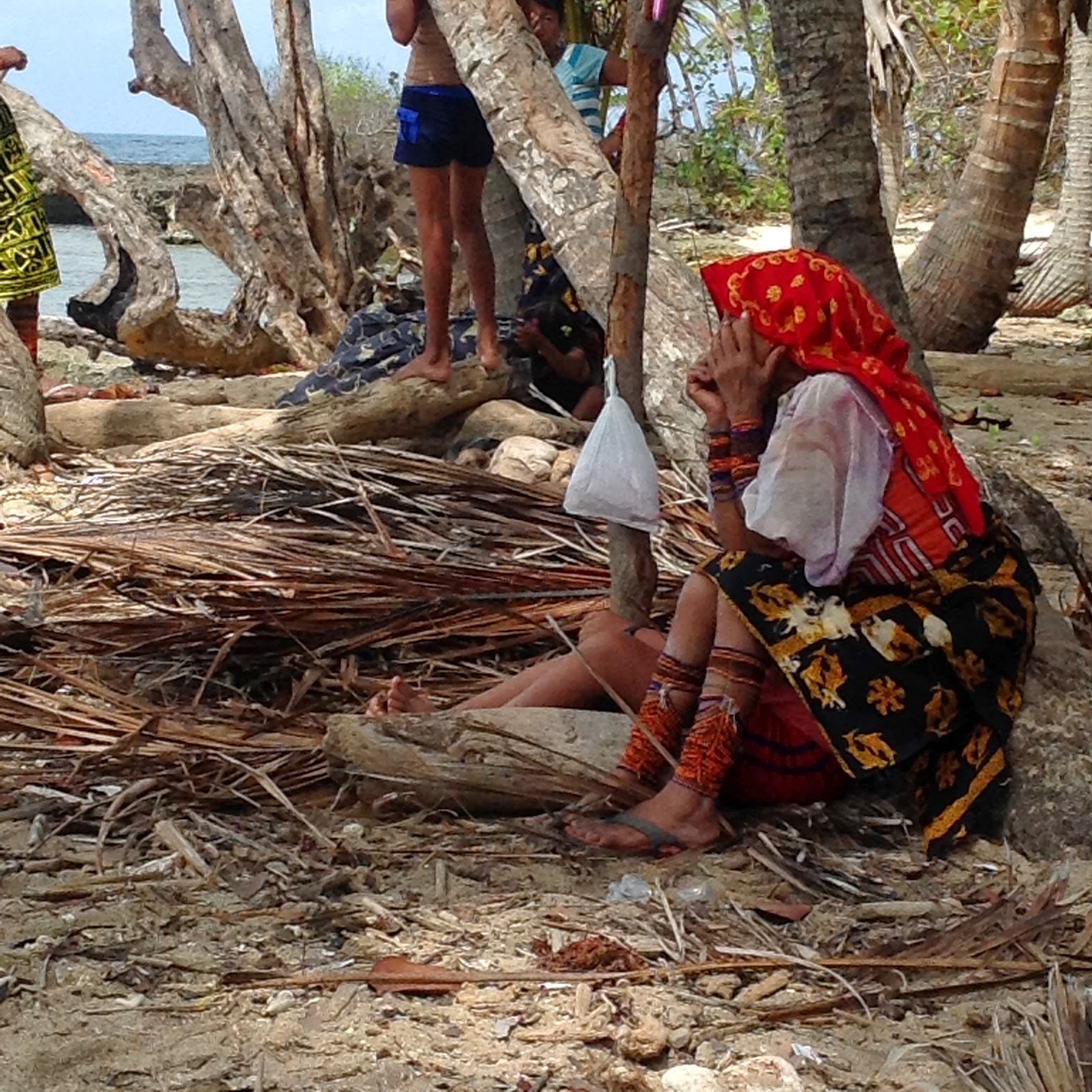
It's have been three months since we sailed, so preparations for the departure from our new "home" Santa Marta, Colombia took us some time. The weather forecast was very positive for next couple days and our pantry and refrigerator were full of the provision (probably more than we actually can consume in one month). On Saturday morning our friends from Alero and Landfall helped us out to cast off under farewell sounds of the horn, and here we are, sailing again and hoping for the nice weather all the way to Panama. First night was a bit rough, with higher seas that we expected, but on the third day wind died completely and we had to turn the engine for 5 hour in order to make it before sunset to the first island in San Blas, Isla Pinos. At this point we were pretty much off the grid - our chart plotter showed that we anchored on the land in the middle of the island and the cruising guide points were a bit off. This island was beautiful! Right from the post card pictures - a bit hilly, the perfect sandy beach, huge old coconut palms on the shore, amazing aquamarine hues of the warm Atlantic water. We got our first visitors the next day in the morning, paid $10 for anchorage and $5 for the tuna fish. Generally, most male kuna indians speak Spanish and couple know English. We met David, who spoke perfect English and who showed us most of the village and asked us to drive on the dinghy to the bigger island to cash the check he had. The trip to and back from Mulatupu island was a bit rough, in one of the tiendas where David cashed his check we bought a new little bucket for the boat, we were looking for this size forever! We figured out that on arrival to the new island we would need to visit a "congress" - the big round community hut made of bamboo and palm's roof with a lot of hummock where the chiefs of the tribe are hanging out. The chief position of the kuna's tribe is voluntary, and their responsibilities include marring and divorcing people, births/deaths registrations, promotion and support of social and cultural developments of the given island tribe. In Isla Pinos we bought our first "mola" - traditional kuna art of fabric application of different colors and different designs of birds, fish, animals and just abstract patterns. Some of the molas are very elaborated and take around 6 months from start to finish. The kuna women wear these applications as part of their outfit in the place of a corset.


Kunas are very friendly, curious and like to laugh. They like to know your name, marriage status, children, relatives and age. It's very easy to make them laugh too, that was Kevin's job. We perused Isla Pinos  in all directions.
We met a lot of villagers, saw their very simple live style in the round bamboo huts with the roofs made from the palm leafs. Most don't have any furniture in their huts and sleep in the hummock, but some have even TVs (not sure there are channels available) and all have the restroom outside situated over the water - so to say, self cleaning no suege required toilet. And yes, you don't want to swim in the sea near the villages.


All islands in San Blas seems to host different kuna tribes, and you definitely can see that difference in the mola designs: some have just geometric pattern and others are very elaborated with animal and birds applications.
On our way to PorVenir we visited other multiple islands which look pretty much the same: round bambu and palm leafs huts, the monument to the island's prominent person near the "congress" hut, a school, couple tiendas with caned milk, flour and detergent. We visited Ustupu - overpopulated bigger island with 2 panamanian armed coast guards playing on their phones, Aligandi - the island hosting the real hospital in the concrete building with four big wind turbines, there we made some ladies friends while buying their molas and who allowed us to take pictures! Then we made it to San Ignacio de Tupile where we finally met other two cruising boats from Holland. We spent very nice day hiking on the mainland jungle and visited kunas cemetery. This is a tradition for kunas women to spent Sunday in cemetery to attend to the tombs of their relatives - burning the coals on the tomb, cleaning around, get a meal with them, etc. Ladies gracefully showed us their passed away relatives and told stories about them. In the jungle we saw a kuna doctor - he was picking up some medicinal herbs and plants for different diseases. We saw parrots, wildly growing pineapple, cashes, cacao, coffee and different types of bananas. And, of course, anywhere we went and talked with women, Kevin made them laugh and even allowed to take picture of them!
    In the next couple days we visited other kunas islands: Aredup Isla - which has a bridge to the next island with a Hospital there and all village women were cleaning dirt roads near hospital with self made brums, then next day was Devils Cays - uninhabited little island with a lot of rolling waves, could not wait to leave it; then Tigre Isla - women are still wearing traditional molas and it seems that the whole island is a big craft shop with molas and other traditional stuff, and, of course, we bought more molas and traditional skirts (not sure I will wear them). We got some corral reef snorkling, but did not see much fish, must be out-fished already by locals.
   We met two other boats from Holland (Rafiki and Cornellius), and travelling together with them was much more fun. In Nargana we tried to get some provision,but did not have much luck. However, we managed to get there some rum and wine. The veggies are brought to this island via boats from Colombia, maybe once a week, but everything is already almost rotten and impossible to use as a food. I bought some flour from the bulk and the next day discovered a lot of bugs there, and had to throw away all of it.
   We had a great trip up the Rio Diablo and then long hike (3 hours one way) up to the little waterfall where kunas put water pipes to supply Nargana with water. It was a great idea, but now all water system is broken and kunas have to come in the river to get their drinking water, as they did for many centuries. During the hike in the jungle we have not seen any caimans or monkeys or wild pigs, but saw plenty of little poisonous frogs (black with neon green spots), huge butterflies and huge and ugly spiders.


  After we had enough time spent in "civilized" Nargana, where all the cruisers in San Blas come to shop for the rotten food and alcohol, we sailed to the Green Island (Kanlildup) - the true pearl of the San Blas islands. Imagine an uninhabited little island all covered with tall coconut palms, a white sandy beach around the shore and, absolutely clean water where you can see in details a starfish and other creatures. The island is encircled with a huge reef with sharks and amazing corrals. The best part of this island that it's very suitable for the kiteboarding training. We found here a lot of other boats, and Fritz (from Bella Ciao, learned how to kiteboard at 62) gave Kevin very useful instructions on kiteboarding, and now he can easily getup and sail with the kite. We celebrated my birthday on the island with new friends and old too - with the great surprise we met Carlos from s.v. Gaya there, who now is working as a crew on the catamaran going to Australia.

  The Green island was very pretty, but our next destination - Holandas Cays islands - were amazing. Mostly uninhabited islands are lying behind 7-mile long barrier reef. The view on the breaking waves at the reef is breathtaking, the water is very clear and you can see all the shades of blue, but this place is not easy to navigate - 15 boats got destroyed on the reefs this season, and we saw 3 of them near the reef. These boats are very easy pray for kunas, they take everything from the boats, including demolishing cabinets and little electric wires.

  We anchored in Swimming pool near BBQ island, in shallow waters. The BBQ island once used by cruisers for burning their garbage and have BBQ parties on the land, now became an "adventure" tent camp for the European tourists. The island is renamed to Turtle island and the workers there charge $3 per person to get ashore of this beautiful place, or, pay $2.50 for a beer and stay how long you want, as we did. We ended up staying at this enchanted place for about a week already, and still are waiting for a suitable weather to sail to Isla Providence. On the first day of exploration surroundings we swam away from the shark and swam with the dolphins almost near our boat. Next days we tried to catch some edible fish, but just caught nurse shark repeatedly, and then some huge fish bite off a wire rigging on our fishing pool, so we must give up on fishing here. And that's fine, because we start buying fish from kunas, even though it's a reef fish very cheap for couple dollars. But we had some luck, Kevin hunted a huge lobster - that dinner was very good. However, living in the paradise is not all in pink colors: all our food supplies are slowly coming to the end (flour for bread, veggies, milk, fruits, alcohol) since there are no any provision spots around. The only option to get any fresh stuff around is to visit kunas on the nearby islands and get some bananas and green mango from them in exchange of milk and coffee. Sometimes, the "fruit" boat operated by kunas shows up in this area and we got lucky to spot it yesterday night. We bought veggies, fruits, milk, rum, beer, etc. for very cheap. Now we can sit here for another week!


  Just to "spice up" our stay while waiting for the weather window we moved to the nearby anchorage called "hot tub", surrounded by the beautiful reefs alive with lots of fish. But, we did not have any luck to catch any of them either! Since these islands don't have a very convenient civilization invention - trash collection tracks once a week - all cruisers deal with the trash in the primitive way. All the organic trash we dispose right in the water, just watch for the swimmers nearby, and the rest, which is mostly plastic and paper, we simply burn on the nearby islands. That is not very plesant task because burning plastic produces a lot of toxic fumes, and some of the cruisers believe it's cleaner to dispose shredded plastic in the middle of the ocean. Who knows, what is better, but it's definitely a problem. What to do with glass and aluminium cans? Well, disposing them in the middle of the ocean seems is not posing any problem for the environment.


Reef Quita Sueno, Colombia Hobbies Islands, Honduras


April 27 - May 3,  Reef Quita Sueno, Colombia/Hobbies Islands, Honduras

 We left Providencia with the first light in the morning, carefully traversing back our arrival track between reefs. The promised wind never happened during our trip and we had to motorsail just to make it before dark to the reef Quita Sueno. This place is just a huge underwater reef with some protection from the waves, there are no any land or even rocks out of the water. Pretty much we anchored in the middle of the ocean. About 5 miles ahead from our anchorage we could spot at least 3 unfortunate cargo and tanker ships destroyed by the reef. So, keeping them in mind we had to trust only our eyes while picking a spot to anchor. All the boats of our fleet (2 cats and 2 monohulls) made it fine, but nobody felt comfortable in the very unprotected roly place. So, every body really wanted to leave Quita Sueno reef with the first light in the morning. "Walking on the water" decided to sail all the way around the Gorda Bank straight to Bay Islands, Honduras - that was the safest route to avoid any unwanted pirate's visits. The rest of us sailed about 12 miles off the dangerous pirate zone through the Gorda Bank. We were suggested to avoid Mosquito Banks and Areciefe Banco and sail at least 10 miles off these places where the "fishermen sometimes turn pirates" attack the cruisers underway. The overnight sailing was very pleasant, but the next day we had to start our engines to make it to our destination before dark. We all anchored in about 20 feet deep water surrounded by reefs. Have to have to use your eyes again, since there are no accurate charts exists for that area, and Honduras in general.

 The Hobbies Islands are scattered around with some distance between each other and all of them are uninhabited. However, during the lobster season the boat from the mainland brings fishermen to stay on some of the islands. We were not sure how these poor guys could live on the islands for months without any houses, fresh water or food availability... The lobsters these poor fishermen catch are imported to the USA for the restaurant "Red Lobster", I hope they get enough money to support their families the rest of the year.

 We parked near the "Boobies island" - the little rocky island with couple palms, thousands wooden lobster cages and thousands birds - the yellow feet and beak boobies - nesting on the island and fostering their young. That was such a nice surprise for us to discover such a nature gem - this little island!

 All three days we stayed at Hobbies we were exploring reefs around and tried our best to catch some food. The reefs there are in very good shape with a lot of different fish - since there are no any humans around to destroy it. Kevin speared a lobster, a crab and a little fish, not much... but tastes really good if you catch it yourself. Everyday we had dinners at each other boats, played domino and had very fun time in this lovely uninhibited place in the middle of nowhere. But on second night we got some squally weather with a lot of rain and lightning which stroke our friends boat. The lightning hit in the nave station and destroyed some electronics, but the crew were fine. We all tried to help them to repair as many parts as could be, but still their depth meter would not work. On the positive note, we filled up our water tanks completely while it was raining.

 We really loved this beautiful place, especially as we had chance to spend it with friends. That was really like vacation from vacation!

 On the forth day in the early morning we all left. Our boat was the only one with working depth meter, so we were ahead of the fleet, slowly progressing through the unknown territory since the charts for this area are totally wrong.

Isla Providence, Colombia


April 20 - 26, Isla Providence, Colombia

We sailed off  Holandas Cays to Providence island together with Miss Molly2 catamaran. The trip was about 48 hours, and not very pleasant (more than 2 meters swells). On the Monday morning we were greeted by hundreds of the dolphins who accompanied us all the way to the entry channel of Providence. What a beautiful and true Caribbean island is Providence!

The best treasure of this place are the local people - very friendly, laid back and happy. The island is bilingual - everybody speaks both Spanish and English, and the locals are the descendants of the eastern Caribbean slaves and old English religious missioners. As much as I did not like much Colombian food on the mainland, I just loved the food on this little Colombian island - fresh fish, lobsters, conch, octopus, etc. accompanied by fresh plantains and rice cooked in the coconut milk, plus locally made very spicy pickled peppers. Yamm! There were not many restaurants around, and most of them on the beaches. The beaches all around the island - white sand, turquoise water, coconut palms, reggae music, rastafarian man cooking food, "coco loko" drink in the fresh coconut, and there are no any other people around... isn't that a description of the internal paradise? We even found a place for Kevin to practice kiteboarding - on the Manchenella beach the winds were much stronger than on other beaches. Our training was not very successful, because the wind was "not good" (citing Loud), but for sure we were entertainment for all the beach - everybody wanted to help us to bring the kite up in the sky, and one local guy actually turned out to be a kiteboarder. There was a nice fun trip around the island with the rented motobike. Especially we liked the Almond Bay beach - very "rasta" style.


  On the anchorage we met with almost everybody and for a week had a very extensive social life. With the guidance of our new friends we hiked to the one of the vacation houses of Pablo Escobar. Now, his once beautiful house is almost demolished by the locals - the tiles, wood, roof, toilets, faucets, etc. now found the new home in the houses of the locals.

On Saturday we went to the Southwest Beach to see the horse races - one of the main local attractions. Laura and Jim (who is staying here every year for 7 years) organized a track-taxi for 16 people (all us cruisers) to transport us to the beach and back. The races itself took only 30 seconds, but it was very emotional seconds among locals, especially for those who lost. For some reason it's only two horses participating in this race, and each time it provokes a lot of heated conversations before and after races. The jockeys are young boys and are admired by the local girls a lot. The horses are raced right along the beach and spectators have to be very alert and careful not to get run over by horses, since there are no any markings of the racing track or any security around. But we survived this event and actually, it went so fast that we did not have time to take good pictures. Together with all the friends we got a lunch at the local bar-restaurant - this time we tried iguana stew, and that was very tasty.


We really loved this little paradise and would stay longer, if the weather would not speed us up to continue. This time we had the whole fleet to sail together, two catamarans (Miss Molly2 and Walking on Water) and two monohulls ("C'est si bon" and us). Our course to Honduras laid through some questionable areas in relation to security - recently there were some reports on the pirates activity around Honduras and Nicaragua shores and islands near Gorda Bank. So, sailing as a group would be more beneficial while crossing those areas.
On Sunday afternoon we got our Zarpe from Mr.Bush (the only immigration agent on the island) and were ready to continue towards Guatemala.